

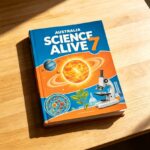


• Content attribute: mainly systematic knowledge systems, usually corresponding to curriculum standards, teaching syllabi, or stage goals.
• Structural features: complete chapters, clear knowledge hierarchy, generally including introduction, explanation, examples, summary, review and other modules.
• Publishing requirements: more emphasis on knowledge accuracy, long-term stability, and teaching applicability, with rigorous editing and review processes.
• Binding orientation:
◦ Primary and secondary school textbooks commonly paperback, perfect binding, saddle stitching;
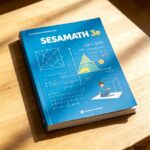
◦ Higher education and vocational education textbooks may use perfect binding, sewn perfect binding, hardcover;
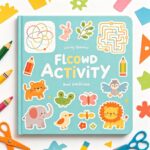
◦ Early childhood textbooks may be paired with color printing, illustrations, activity pages, stickers, or three-dimensional processes.
• Paper features:
◦ Text textbooks commonly 70g–100g offset paper;
◦ Color illustrated textbooks commonly 80g–157g art paper or light-coated paper;
◦ Early childhood textbooks emphasize paper whiteness, thickness, and environmental friendliness.
Applications
• Kindergarten enlightenment textbooks
• Primary and secondary school textbooks
• High school new curriculum standard textbooks
• University public course textbooks
• Vocational education textbooks
• Adult education textbooks
• Training course standard textbooks
Format: mainly 16K, A4, B5; primary schools also commonly large 16K;
Page count: 32P–200P more common, some thick textbooks can reach over 300P;
Binding: paperback, perfect binding, sewn perfect binding, saddle stitching, hardcover;
Inner paper: 70g–100g offset paper, 80g–157g art paper;
Cover: 200g–300g card, can be matte/gloss laminated;
Printing: single-color, two-color, four-color printing all available;
Applicable objects: classroom teaching, systematic learning, course supporting textbooks.